15 Essential Free SEO Tools Every Website Needs in 2026
A hands-on 2026 review of the best free SEO tools — keyword research, technical audits, backlinks, and Core Web Vitals — plus how to combine them into a zero-cost SEO stack that moves rankings.
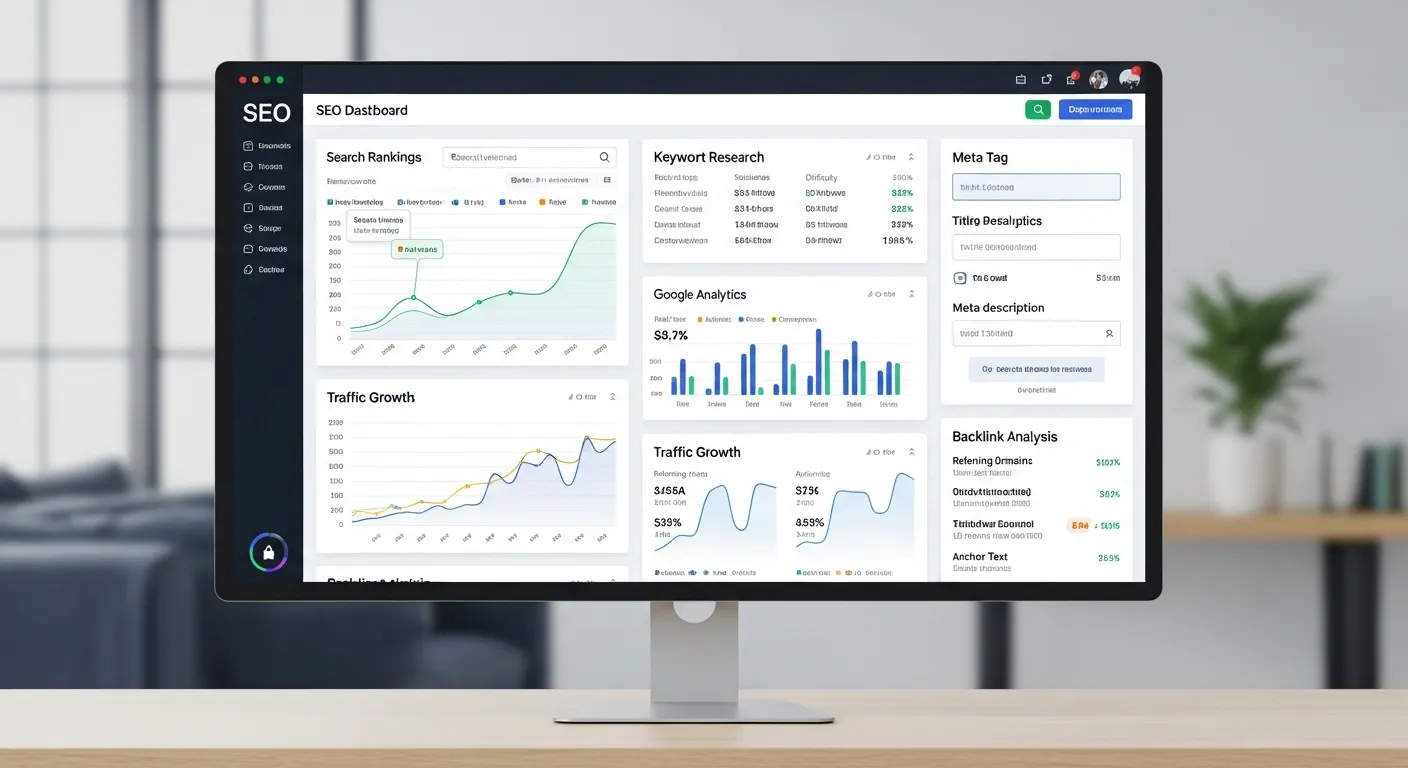
Why SEO Tools Are Essential
Search Engine Optimization (SEO) is crucial for online visibility, but it is nearly impossible to execute blindly. The right SEO tools help you understand your website's performance, identify opportunities for improvement, and track your progress over time — the difference between guessing and engineering results.
Every SEO decision depends on three questions: where do we stand (audits and index checks), what should we fix first (prioritized issues and keyword opportunities), and did it work (rankings, traffic, and Core Web Vitals trends). This guide reviews the 15 free tools that answer those questions end-to-end in 2026 and shows how to chain them into a weekly workflow. For the strategy behind the toolbox, start with our pillar guide to SEO optimization strategies for content marketing.
Core SEO Tool Categories
Keyword Research
Find the right keywords to target for your content and understand search intent — the foundation of the SEO strategy pillar.
- Search volume analysis
- Keyword difficulty assessment
- Competitor keyword analysis
Performance Analysis
Monitor your website's search performance and identify areas for improvement.
- Ranking tracking
- Traffic analysis
- Click-through rates
Technical SEO
Ensure your website meets technical requirements for search engines, from robots.txt to sitemaps.
- Site speed analysis
- Mobile-friendliness
- Crawlability issues
Link Building
Analyze backlinks and identify opportunities to build domain authority.
- Backlink analysis
- Domain authority tracking
- Link opportunity identification
Essential Free SEO Tools
Google's Free SEO Tools
Google Search Console
Monitor your website's presence in Google search results.
- • Search performance data
- • Index coverage reports
- • Mobile usability issues
- • Core Web Vitals
Google Analytics
Understand your website traffic and user behavior.
- • Organic traffic analysis
- • User engagement metrics
- • Conversion tracking
- • Audience insights
Google PageSpeed Insights
Analyze your website's loading speed and performance.
- • Core Web Vitals scores
- • Performance recommendations
- • Mobile and desktop analysis
- • Real-world data
Google Keyword Planner
Research keywords and get search volume data.
- • Keyword search volumes
- • Competition levels
- • Bid estimates
- • Keyword suggestions
NoCostTools Free SEO Tools — 2026 Reviews
Every tool below is free, browser-based, and beginner-friendly — and it is the exact stack we use to maintain this site. Ratings reflect our 2026 re-test of accuracy, speed, and ease of use.
Meta Tag Generator
Generates titles, descriptions, Open Graph, and Twitter tags with live SERP previews and character validation. The fastest way to ship metadata that will not truncate. Verdict: essential.
Use ToolSEO Analyzer
Full on-page audit with prioritized fixes — headings, links, images, and social tags in one pass. Verdict: your weekly health check.
Use ToolKeyword Density Checker
Paste draft copy to see term frequencies and keep primary keywords in the natural 0.5-1.5% range. Verdict: perfect pre-publish gate.
Use ToolSitemap Generator
Builds clean XML sitemaps, including image entries, ready for Search Console submission. Verdict: essential for launches.
Use ToolXML Sitemap Validator
Catches broken URLs, wrong lastmod formats, and encoding issues before Google does. Verdict: zero excuses for invalid sitemaps.
Use ToolRobots.txt Generator
Creates safe crawler directives with sitemap references — no syntax mistakes that can deindex a site. Verdict: essential.
Use ToolGoogle Index Checker
Confirms whether specific URLs are actually indexed — the truth behind every ranking question. Verdict: five-second sanity check.
Use ToolBacklink Checker
Surfaces referring domains and anchor patterns so you can spot toxic links and copy competitor wins. Verdict: best free authority lens.
Use ToolDomain Authority Checker
Benchmarks your authority score against competitors to size up realistic keyword targets. Verdict: use it before every campaign.
Use ToolPage Speed Checker
Load-performance testing on mobile and desktop with clear prioritized recommendations. Verdict: fast sites rank; test monthly.
Use ToolCore Web Vitals Checker
Pass/fail verdicts for LCP, INP, and CLS per URL — the exact UX signals Google grades. Verdict: essential in 2026.
Use ToolSubdomain Finder
Maps every subdomain attached to your domain — forgotten staging sites and forgotten subdomains leak crawl budget. Verdict: enterprise hygiene.
Use ToolWhat Changed in Free SEO Tools for 2026
Three shifts define the 2026 free-tool landscape — and all three favor site owners who keep their fundamentals clean:
- AI-assisted audits became table stakes. Free analyzers now explain issues in plain language and prioritize fixes instead of dumping raw warnings. Pair the automation with your own judgment and verify recommendations against a live crawl using the SEO Analyzer.
- INP replaced FID everywhere. Interactivity metrics now dominate free speed tools. If scores dipped after the metric change, work through our Web Vitals optimization guide and re-test with the Core Web Vitals Checker.
- Mobile-first is simply "first." Free testing is mobile by default. Treat our mobile speed optimization guide as required reading before touching desktop scores.
SEO Best Practices
On-Page SEO Checklist
- Title Tags: Include target keywords and keep under 60 characters — generate them with the Meta Tag Generator
- Meta Descriptions: Write compelling descriptions under 160 characters — see the meta tag guide
- Header Tags: Use H1, H2, H3 tags to structure content
- URL Structure: Use clean, descriptive URLs with keywords
- Internal Linking: Link to relevant pages within your site
- Image Alt Text: Describe images for accessibility and SEO
- Content Quality: Create valuable, original content for users
Technical SEO Checklist
- Site Speed: Optimize for fast loading times (under 3 seconds)
- Mobile Responsiveness: Ensure your site works on all devices
- SSL Certificate: Secure your site with HTTPS
- XML Sitemap: Submit sitemap to search engines via the Sitemap Generator
- Robots.txt: Guide search engine crawlers via the Robots.txt Generator
- Structured Data: Implement schema markup
- 404 Errors: Fix broken links and pages
Copy-Paste Technical Quick Wins
A minimal robots.txt that protects crawl budget and points crawlers at your sitemap (generate a tailored version with our Robots.txt Generator):
User-agent: *
Disallow: /search?
Disallow: /admin/
Allow: /

Sitemap: https://example.com/sitemap.xml
And the canonical meta tag every page should carry (build the full set with the Meta Tag Generator):
<link rel="canonical" href="https://example.com/your-page" />
<meta name="robots" content="index, follow, max-image-preview:large" />
Keyword Research Strategy
Step-by-Step Keyword Research Process
Brainstorm Seed Keywords
Start with basic terms related to your business, products, or services.
Expand with Tools
Use Google Keyword Planner, Ubersuggest, or Answer The Public for more ideas, then validate draft copy with the Keyword Density Checker.
Analyze Competition
Research what keywords your competitors are ranking for.
Assess Search Intent
Understand what users are looking for when they search these terms, and map each term to one page — the full process is in our SEO strategy pillar guide.
Prioritize Keywords
Focus on keywords with good search volume and manageable competition.
Link Building Strategies
Content Marketing
Create valuable content that naturally attracts backlinks.
- • Blog posts and guides
- • Infographics and visuals
- • Research and studies
- • Tools and calculators
Relationship Building
Build relationships with other website owners and bloggers.
- • Guest posting
- • Blogger outreach
- • Industry partnerships
- • Expert interviews
Technical Tactics
Use technical methods to discover link opportunities.
- • Broken link building
- • Resource page outreach
- • Competitor backlink analysis
- • Unlinked brand mentions
Community Engagement
Participate in relevant online communities and forums.
- • Industry forums
- • Social media groups
- • Q&A platforms
- • Local business directories
Measure every campaign: pull referring domains with the Backlink Checker, score prospects with the Domain Authority Checker, and go deeper with our quality backlinks guide, competitive backlink analysis, and toxic link disavow guide.
Measuring SEO Success
Key Metrics to Track
| Metric | What It Measures | Tool to Use | Target |
|---|---|---|---|
| Organic Traffic | Visitors from search engines | Google Analytics | Steady growth |
| Keyword Rankings | Position in search results | Search Console | Top 10 positions |
| Click-Through Rate | % of users who click your result | Search Console | Above industry average |
| Backlinks | Number and quality of links | Backlink Checker | Quality over quantity |
| Page Speed | How fast pages load | PageSpeed Insights | Under 3 seconds |
| Core Web Vitals | User experience metrics | Search Console | Good ratings |
Make the checks routine: the Google Index Checker for indexation, the Page Speed Checker and Core Web Vitals Checker for experience, and the SEO Analyzer for on-page drift.
Common SEO Mistakes to Avoid
Avoid These SEO Pitfalls
- Keyword Stuffing: Overusing keywords unnaturally in content
- Ignoring Mobile: Not optimizing for mobile devices
- Slow Loading: Having pages that load too slowly
- Duplicate Content: Having identical content across multiple pages
- Poor Internal Linking: Not linking between relevant pages
- Missing Meta Tags: Not optimizing title tags and meta descriptions
- Buying Links: Purchasing low-quality backlinks
- Ignoring Analytics: Not tracking and analyzing performance
Conclusion
SEO success in 2026 requires the right combination of tools, strategies, and consistent effort. The free stack reviewed above covers audits, keyword research, technical health, and authority tracking — everything you need to improve search visibility and drive organic traffic without a paid subscription.
SEO Action Plan:
- Set up Google Search Console and Analytics
- Conduct keyword research for your niche
- Optimize your existing pages for target keywords
- Create high-quality, valuable content regularly
- Build relationships and earn quality backlinks
- Monitor performance and adjust strategies
- Stay updated with SEO best practices
Go deeper next: our SEO optimization strategies pillar guide turns this toolbox into a full 2026 strategy, while the meta tag guide, robots.txt guide, and XML sitemap guide cover the technical fundamentals one by one.
How to Build Your Free SEO Stack
- Audit first: Run the SEO Analyzer on your homepage and five priority pages to surface on-page issues.
- Fix the metadata: Regenerate titles and descriptions with the Meta Tag Generator using the 50-60 / 150-160 character limits above.
- Clear technical debt: Ship a validated sitemap (Sitemap Generator + XML Sitemap Validator) and a safe robots.txt (Robots.txt Generator).
- Verify indexation: Confirm key URLs are in Google with the Google Index Checker.
- Track speed and authority: Schedule monthly checks with the Page Speed Checker, Core Web Vitals Checker, and Backlink Checker.
- Iterate quarterly: Re-audit, refresh stale content, and expand your cluster using the strategy pillar.
Common Use Cases
New Website Launches
Generate metadata, sitemaps, and robots rules on day one so launch pages are discoverable within days, not months.
Monthly SEO Maintenance
Re-run the SEO Analyzer, validate sitemaps after publishing, and watch speed scores with the Page Speed Checker.
Competitor Research
Benchmark authority with the Domain Authority Checker and study rival link profiles before planning campaigns.
Client Reporting & Teaching
Free, ad-light tools make clean screenshots for reports and classrooms — no trial accounts or paywalls required.
Frequently Asked Questions
Learn More About Free SEO Tools
Free SEO tools remove the cost barrier from search optimization: every check, generator, and validator in this guide runs in your browser at no charge, with no signup required.
We continuously re-test this stack against Google's evolving requirements — from INP thresholds to AI-era structured data — so the recommendations stay current. For strategy context, read the SEO optimization strategies pillar; for technical fundamentals, continue with the keyword density guide and the domain authority guide.