Ounces to Grams Cooking Conversion Guide: Master Precise Measurements for Perfect Baking 2025
Master precise cooking measurements with our comprehensive ounces to grams conversion guide. Learn professional baking techniques, ingredient weights, recipe scaling, and measurement strategies for consistent, delicious results every time.
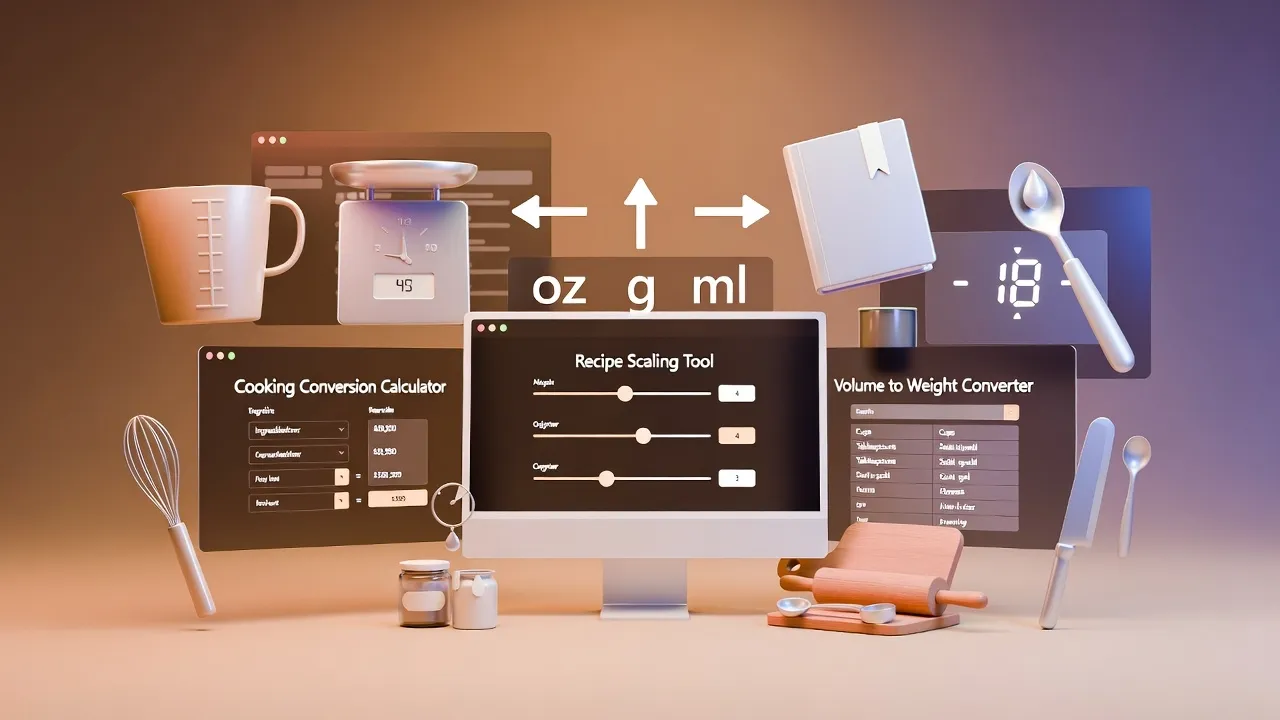
Why Precise Weight Measurements Transform Your Cooking
Accurate measurements are the foundation of successful cooking and baking. Converting ounces to grams provides the precision needed for consistent results, especially in baking where small variations can dramatically affect outcomes. In 2025, professional chefs and home bakers increasingly rely on weight measurements for reliability and repeatability.
Our Ounces to Grams Converter provides instant, precise conversions for all your cooking and baking needs, helping you achieve professional-level consistency in your kitchen.
Understanding the Ounces to Grams Conversion
Master the fundamental conversion that will elevate your cooking precision:
Basic Conversion Formula:
1 ounce = 28.35 grams
To convert ounces to grams: Ounces × 28.35 = Grams
Quick Conversion Reference:
- 1 oz = 28 grams (rounded for easy calculation)
- 2 oz = 57 grams
- 4 oz = 113 grams
- 8 oz = 227 grams
- 16 oz (1 lb) = 454 grams
Weight vs. Volume Ounces
- Weight ounces (oz): Used for solid ingredients
- Fluid ounces (fl oz): Used for liquids
- Key difference: 1 oz ≠ 1 fl oz
- Always check: Which type the recipe specifies
Professional Tips
- Use 28g per ounce for easy mental math
- Invest in a precise digital scale
- Weigh ingredients directly into mixing bowls
- Keep conversion charts handy in your kitchen
Essential Ingredient Conversion Chart
Master conversions for the most common baking and cooking ingredients:
| Ingredient | 1 oz | 2 oz | 4 oz | 8 oz | Common Uses |
|---|---|---|---|---|---|
| All-purpose flour | 28g | 57g | 113g | 227g | Bread, cakes, cookies |
| Granulated sugar | 28g | 57g | 113g | 227g | Sweetening, caramelizing |
| Butter | 28g | 57g | 113g | 227g | Baking, sautéing |
| Brown sugar | 28g | 57g | 113g | 227g | Cookies, marinades |
| Powdered sugar | 28g | 57g | 113g | 227g | Frosting, dusting |
| Cocoa powder | 28g | 57g | 113g | 227g | Chocolate desserts |
| Nuts (chopped) | 28g | 57g | 113g | 227g | Garnish, texture |
| Cheese (grated) | 28g | 57g | 113g | 227g | Topping, flavoring |
Baking Essentials Quick Reference
Dry Ingredients
- 1 cup flour: 4.25 oz = 120g
- 1 cup sugar: 7 oz = 200g
- 1 cup brown sugar: 7.5 oz = 213g
- 1 cup powdered sugar: 4 oz = 113g
Fats & Proteins
- 1 stick butter: 4 oz = 113g
- 1 cup butter: 8 oz = 227g
- 1 large egg: 2 oz = 57g
- 1 cup nuts: 4 oz = 113g
Professional Baking Measurement Techniques
Learn the techniques professional bakers use for consistent, perfect results:
Essential Kitchen Equipment
Digital Kitchen Scale
- Accuracy: 1-gram precision minimum
- Capacity: 5-10 lb (2-5 kg) range
- Units: Grams, ounces, pounds
- Features: Tare function, large display
Measuring Tools
- Measuring cups: Nested dry ingredient sets
- Liquid measures: Glass with clear markings
- Spoons: Nested measuring spoon sets
- Scoops: Portion control and consistency
Professional Accessories
- Bowl scraper: Complete ingredient transfer
- Bench scraper: Dough portioning
- Offset spatula: Precise spreading
- Digital thermometer: Temperature accuracy
Step-by-Step Measuring Process
- Prepare your scale: Place on level surface, turn on, ensure zero reading
- Use tare function: Place bowl on scale, press tare to reset to zero
- Add ingredients: Pour slowly, watching digital readout closely
- Be precise: Add or remove small amounts to hit exact measurements
- Record weights: Note actual weights for recipe refinement
- Clean as you go: Wipe scale between different ingredients
Professional Secret
Professional bakers measure directly into mixing bowls using the tare function. This eliminates transfer errors and saves time while ensuring accuracy. Add one ingredient, tare to zero, add the next ingredient, and repeat.
Recipe Scaling and Conversion Strategies
Master the art of scaling recipes up or down while maintaining perfect proportions:
Scaling Calculations
| Original Recipe | Scale Factor | Calculation Method | Example (4 oz flour) |
|---|---|---|---|
| Serves 4 | ×0.5 (Half) | Divide all ingredients by 2 | 2 oz = 57g |
| Serves 4 | ×1.5 (150%) | Multiply all ingredients by 1.5 | 6 oz = 170g |
| Serves 4 | ×2.0 (Double) | Multiply all ingredients by 2 | 8 oz = 227g |
| Serves 4 | ×3.0 (Triple) | Multiply all ingredients by 3 | 12 oz = 340g |
Special Considerations for Scaling
Handle Carefully
- Leavening agents: Don't double baking soda/powder
- Seasonings: Scale gradually, taste and adjust
- Extracts: Less is often more when scaling up
- Cooking times: May not scale proportionally
Scale Directly
- Main ingredients: Flour, sugar, fats scale perfectly
- Liquids: Water, milk, oils scale proportionally
- Eggs: Use weight for precise scaling
- Fruits/vegetables: Scale by weight
Recipe Conversion Workflow
Converting Volume-Based Recipes to Weight:
- Research ingredient weights: Find reliable weight equivalents for volume measurements
- Convert systematically: Work through recipe line by line
- Test small batch: Make a small test version to verify results
- Document changes: Record successful conversions for future use
- Adjust as needed: Fine-tune based on results
International Recipe Conversion
Navigate global recipes with confidence using proper measurement conversions:
Common International Measurements
| Country/Region | Common Units | Ounce Equivalent | Gram Conversion | Notes |
|---|---|---|---|---|
| United States | Ounces, cups, pounds | 1 oz = 1 oz | 28.35g | Standard imperial system |
| United Kingdom | Ounces, stones, pints | 1 UK oz = 1 oz | 28.35g | Imperial fluid ounces differ |
| Europe/Australia | Grams, kilograms | 1 oz = 30g (rounded) | Direct gram measurements | Metric system standard |
| Asia | Grams, mL, various traditional | Varies by country | Direct gram measurements | Often metric with local units |
Traditional Measurement Equivalents
European Baking
- German recipes: Often specify grams directly
- French recipes: Mix of metric and traditional measures
- Italian recipes: Often use "handful" or "pinch"
- Conversion tip: European flour = US flour + 2-3g per cup
Asian Cooking
- Chinese recipes: Often use grams or traditional cups
- Japanese recipes: Metric system with rice cup (180ml)
- Indian recipes: Mix of metric and traditional measures
- Conversion tip: Asian ingredients may have different densities
Common Conversion Mistakes and How to Avoid Them
Learn from common errors to ensure perfect measurements every time:
Top Measurement Mistakes
- Confusing weight and volume ounces: Always check if recipe means weight or fluid ounces
- Inconsistent rounding: Use exact conversions for precision baking
- Ignoring ingredient density: Different ingredients have different weights per volume
- Not using tare function: Forgetting to zero scale between ingredients
- Wrong conversion ratios: Using 30g instead of 28.35g per ounce
- Measuring hot ingredients: Weight can change with temperature
Troubleshooting Guide
Problem Signs
- Dense, heavy baked goods
- Recipes don't rise properly
- Inconsistent results each time
- Flavors seem off-balance
- Textures are unexpected
Solutions
- Double-check weight conversions
- Verify scale accuracy with known weights
- Ensure ingredients are room temperature
- Re-read recipe for weight vs. volume
- Use precise gram measurements
Quality Control Checklist
- Calibrate your scale monthly using known weights or coins
- Keep conversion charts visible in your kitchen for quick reference
- Measure ingredients in order they'll be used to prevent errors
- Document successful conversions for future recipe use
Frequently Asked Questions
Ready to Convert Your Measurements?
Use our precise ounces to grams converter for accurate cooking and baking measurements. Perfect for recipe conversion and scaling projects.
Convert Ounces to GramsRelated Cooking Tools
Table of Contents
Popular Cooking Guides
Unit Conversion Guide BAKING
Professional Baking Tips RECIPES
Recipe Scaling Guide