Mulch Calculator Guide: Complete Landscaping Coverage Tutorial 2025
Master mulch calculations with our comprehensive guide. Learn optimal mulch depth, coverage formulas, types of mulch, and professional landscaping techniques that create beautiful, low-maintenance garden beds.
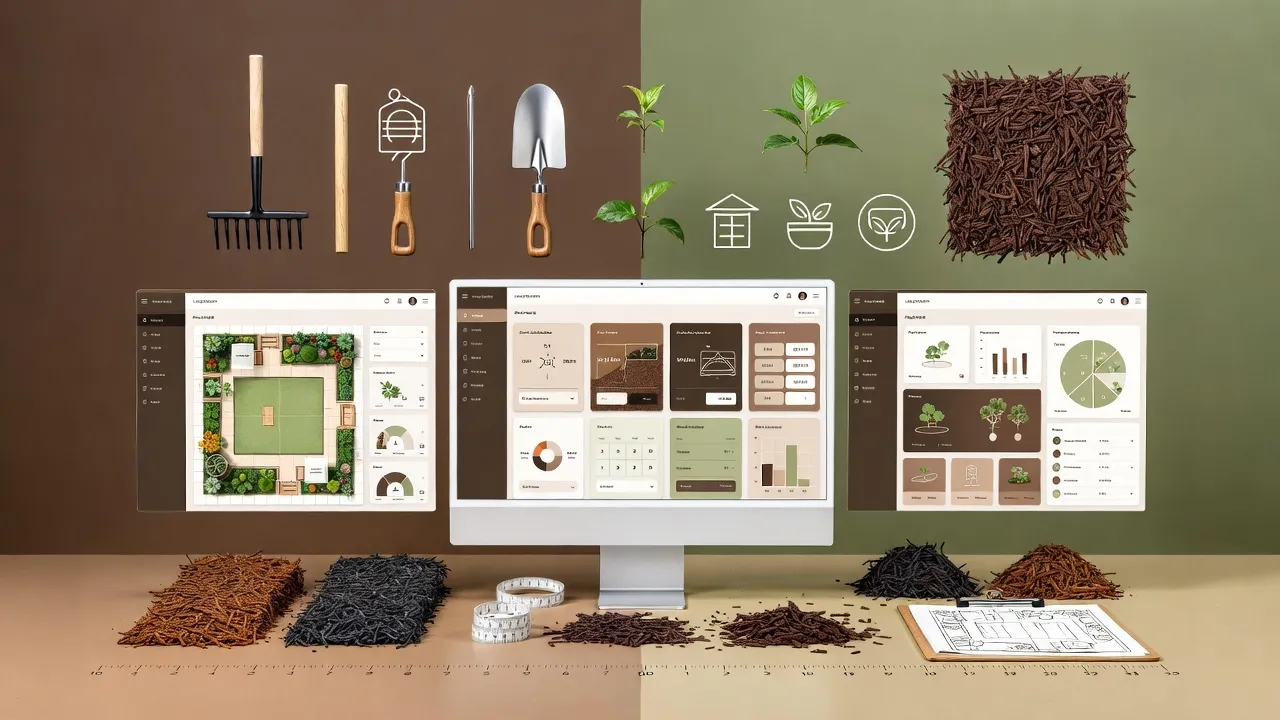
Why Accurate Mulch Calculations Matter for Your Garden
Proper mulch calculation is essential for successful landscaping projects. Getting the right amount ensures optimal plant health, weed suppression, and moisture retention while avoiding waste and overspending. In 2025, with mulch costs averaging $30-50 per cubic yard, precise calculations can save hundreds on large projects.
Our Mulch Calculator provides instant estimates for any garden bed size, helping you order the perfect amount for professional results.
How to Calculate Mulch for Garden Beds
Follow this step-by-step process to determine exactly how much mulch you need:
Step-by-Step Mulch Calculation:
1. Measure Your Garden Beds
- Rectangular beds: Length × Width = Square footage
- Circular beds: π × radius² = Square footage (radius = diameter ÷ 2)
- Irregular shapes: Break into smaller rectangles and add totals
2. Choose Optimal Mulch Depth
- 2 inches: Light coverage, decorative purposes
- 3 inches: Standard depth for most garden beds
- 4 inches: Heavy weed suppression, mature trees
3. Apply the Mulch Formula
Cubic Feet Formula:
Area (sq ft) × Depth (inches) ÷ 12 = Cubic feet needed
Cubic Yards Formula:
Cubic feet ÷ 27 = Cubic yards needed
Example Calculation
Garden bed: 20 ft × 10 ft = 200 sq ft
Depth: 3 inches
Cubic feet: 200 × 3 ÷ 12 = 50 cubic feet
Cubic yards: 50 ÷ 27 = 1.85 cubic yards
Quick Reference
100 sq ft at 3" deep = 25 cubic feet
300 sq ft at 3" deep = 2.8 cubic yards
500 sq ft at 3" deep = 4.6 cubic yards
Types of Mulch and Their Coverage
Different mulch types have varying weights and coverage properties that affect your calculations:
Organic Mulches
- Shredded Bark: Most popular, lasts 2-3 years
- Wood Chips: Best for pathways, long-lasting
- Pine Straw: Acidic soil preference, easy application
- Compost: Adds nutrients, needs annual refresh
- Grass Clippings: Free option, decomposes quickly
Inorganic Mulches
- Rubber Mulch: 10+ year lifespan, no decomposition
- Gravel/Stone: Permanent, good drainage
- Landscape Fabric: Under mulch weed barrier
- Plastic Sheeting: Commercial use, not decorative
Mulch Bag vs. Bulk Calculator
Understanding the difference between bagged and bulk mulch helps optimize your purchase:
| Coverage Area | 2 cu ft Bags Needed | 3 cu ft Bags Needed | Bulk (Cubic Yards) | Best Choice |
|---|---|---|---|---|
| 50 sq ft (3" deep) | 6-7 bags | 4-5 bags | 0.5 cubic yards | Bags |
| 200 sq ft (3" deep) | 25 bags | 17 bags | 1.9 cubic yards | Either |
| 500 sq ft (3" deep) | 63 bags | 42 bags | 4.6 cubic yards | Bulk |
| 1000 sq ft (3" deep) | 125 bags | 84 bags | 9.3 cubic yards | Bulk |
Cost Savings Tip
Bulk mulch costs 30-50% less than bagged for projects over 3 cubic yards. Consider delivery fees when comparing total costs.
Professional Mulching Techniques
Proper application technique is as important as accurate calculations for garden success:
Garden Bed Preparation
1. Clear Weeds
Remove all existing weeds and grass before mulch application. This prevents weed growth through mulch layers.
2. Edge Beds
Create clean borders with a spade or edger. Sharp edges contain mulch and create professional appearance.
3. Apply Evenly
Spread mulch to consistent depth, keeping 3 inches away from plant stems and tree trunks.
Common Mulching Mistakes to Avoid
- Volcano Mulching: Never pile mulch against tree trunks - causes root rot
- Too Deep: Over 4 inches prevents water and air circulation
- Wrong Type: Consider soil pH - pine mulch acidifies, hardwood is neutral
- Ignoring Drainage: Avoid mulch in areas with poor drainage
Seasonal Mulching Calendar
Timing your mulch application maximizes benefits and plant health:
Spring Mulching (March-May)
- Refresh existing mulch to 3-inch depth
- Best time for new garden bed installation
- Apply after soil warms to 60°F
- Use mulch calculator for spring refresh amounts
Fall Mulching (September-November)
- Prepare beds for winter protection
- Apply thicker layer (4 inches) for cold climates
- Best time for organic mulch that breaks down
- Calculate extra 25% for winter coverage
Cost-Effective Mulching Strategies
Smart purchasing and application strategies reduce project costs without sacrificing quality:
Money-Saving Tips:
- Buy in Season: Purchase mulch in late fall/early spring for 20-30% savings
- Group Orders: Coordinate with neighbors for bulk delivery discounts
- Free Sources: Tree trimming companies often provide free wood chips
- Calculate Exactly: Use our mulch calculator to avoid over-ordering
- Compare Delivery: Local suppliers often beat big box store prices on bulk orders
| Purchase Method | Cost per Cubic Yard | Delivery Cost | Best For |
|---|---|---|---|
| Home center bags | $50-80 | Self-pickup | Small projects < 100 sq ft |
| Local supplier bulk | $25-40 | $50-100 | Medium projects 200-1000 sq ft |
| Municipal compost | $15-25 | Self-pickup | Large projects > 1000 sq ft |
Frequently Asked Questions
Ready to Calculate Your Mulch?
Use our professional mulch calculator for instant, accurate estimates tailored to your specific garden beds and landscaping projects.
Calculate Mulch NowRelated Garden Tools
Table of Contents
Popular Garden Guides
Soil Calculator Guide HOME IMPROVEMENT
Paint Calculator Guide FLOORING
Tile Calculator Guide